None of our Childhood Vaccines have ever been Safety Tested against a Placebo Group!
Uncategorized
Comments Off on None of our Childhood Vaccines have ever been Safety Tested against a Placebo Group!
Jan 292019

By Full Measure Staff
Full Measure is a weekly Sunday news program focusing on investigative, original and accountability reporting. The host is Sharyl Attkisson, five-time Emmy Award winner and recipient of the Edward R. Murrow award for investigative reporting. She is backed by a team of award winning journalists.
Each week, we have a cover story that explores untouchable topics in a fearless way including: immigration, terrorism, government waste, national security and whistleblower reports on government and corporate abuse and misdeeds.
Full Measure is broadcast to 43 million households in 79 markets on 162 Sinclair Broadcast Group stations, including ABC, CBS, NBC, FOX, CW, MyTV, Univision and Telemundo affiliates. It also streams live Sunday mornings at 9:30 a.m. ET.
http://fullmeasure.news/

POSTED BY: CHILDREN’S HEALTH DEFENSE
Using data collected from parents of more than 43,000 children from the 2016 HRSA National Survey of Children’s Health, researchers are now estimating as many as 1 in 40 children ages 3 to 17 in the U.S. have been diagnosed with autism. This is a huge increase from April 2018 when the CDC reported 1 in 59 children are on the spectrum.
Published online in the journal Pediatrics, the new HRSA study looked at a wider age range of children and used data collected from parents nationally vs. the CDC’s more narrow review of medical and school records of 8-year-olds living in 11 residential areas.
This article from UPI provides additional insights from the researchers and more specific details about the results.
Celeste McGovern on Nov 19, 2018 1:32:03 PM
CHILDREN’S MEDICAL SAFETY RESEARCH INSTITUTE
Aluminum salts, a key ingredient added in growing amounts to numerous childhood and adult vaccines, have never been tested for their effects on health in humans, a new review paper from British researchers says.
“Aluminum based adjuvants are effective and cheap but are they safe?” the team of researchers at Keele University ask in the study published this month in Allergy, Asthma & Clinical Immunology.
Although aluminum has been used for decades as an adjuvant to provoke the immune system to make antibodies to other vaccine ingredients, it works precisely because it is toxic, said Christopher Exley, who has studied the metal’s adverse effects biological systems from fish to humans for more than three decades. His paper with Emma Shardlow and Matthew Mold reviews what is known about the different modes of action of different aluminum salts and confirms that it may account for the wide spectrum of serious adverse events associated with vaccines.
“Aluminium-adjuvanted vaccines have a long history of clinical successes and a commensurately long history of vaccine-related adverse events,” the scientists write. “Since there is no requirement to demonstrate the safety of [aluminum-based adjuvants] ABAs, one could quickly surmise that adverse events following vaccination are the direct or indirect effects of ABAs.”
“What might be the cause of such events, ranging from health issues directly associated with the injection site to brain encephalopathy and death?” Exley asks in a related blog published today in the Hippocratic Post.
“We know that aluminium adjuvants are toxic at the injection site, this toxicity is essentially their mode of action (see https://www.hippocraticpost.com/infection-disease/aluminium-adjuvants-vaccines/), and evidence is burgeoning that this toxicity is also being manifested away from the injection site (see https://www.hippocraticpost.com/infection-disease/aluminium-and-autism/).”
No placebos
Taking aim at pharmaceutical giant Merck, the manufacturer of Gardasil and Gardasil 9 vaccines against the human papilloma virus (HPV), Exley notes that the company has “prevented any independent study of its proprietary adjuvant and concomitantly this vaccine has arguably the highest frequency of recorded adverse events of all vaccines and this according to the manufacturer’s own data!”
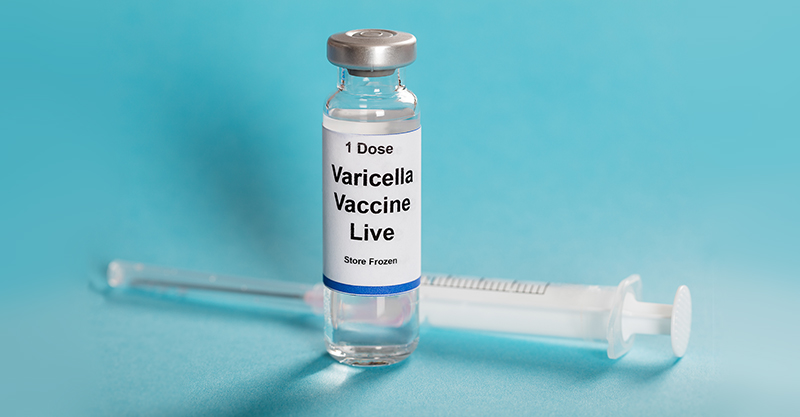
“Collusion” is the word du jour, and the practice’s very characteristics—deception, fraud, misrepresentation and secrecy—often prevent collusive acts from coming to light. In the scientific research community, would-be deceivers draw on a variety of tricks to slant their message, including manipulating data, employing other questionable research practices, not disclosing conflicts of interest, harassing whistleblowers and engaging in outright censorship.
The Centers for Disease Control and Prevention (CDC) is no stranger to any of these tactics, but eventually, as Shakespeare once predicted, the “truth will out.” Critics and senior scientists, in growing numbers, have been pulling back the veil on the CDC’s unethical modus operandi, arguing that questionable practices have become “the norm and not the rare exception.” Adding to this emerging picture of a public agency captive to “rogue interests,” a March 2018 article in the Annals of Clinical Pathology describes CDC’s suppression of inconvenient research findings pertaining to its Universal Varicella Vaccination Program. The author, an independent computer scientist, outlines in morbidly fascinating detail the “collusion” between CDC and its local public health partner to conceal unwanted chickenpox vaccine outcomes from the public.
Prior to the 1990s, natural chickenpox (caused by the varicella zoster virus) was a nearly universal childhood experience and, in children with normal immune systems, played out as a mild disease that conferred long-term immunity. In 1995, without any compelling medical reason to do so, the CDC added the chickenpox vaccine to the childhood vaccine schedule for 12- to 15-month-olds. In 2006, acknowledging the problem of waning vaccine effectiveness, it indicated that four- to six-year-old children needed to get a second (booster) shot.

A breakthrough study by scientists from the University of British Columbia in Vancouver, Canada has been published in the Journal of Inorganic Biochemistry demonstrating that significant correlations exist between rates of Autism Spectrum Disorder (ASD) and total aluminum adjuvants given to children through vaccines in several Western countries.
According to the authors of the study, Sneha K.S. Sheth, Yongling Li and Christopher A. Shaw, this is the first experimental study to demonstrate that aluminum adjuvants can impair social behavior if applied in the early period of postnatal development. These correlations satisfied eight out of nine Hill criteria for causality. Experimental studies have demonstrated a range of behavioral abnormalities in young mice after postnatal exposure to aluminium. To build on the team’s previous work, the current study investigates the effect of aluminium adjuvants on social behavior in mice. Anomalies in social interaction are a key characteristic of those with ASD.
Authors: Matthew Molda, Dorcas Umarb, Andrew Kingc, Christopher Exleya,
Autism spectrum disorder is a neurodevelopmental disorder of unknown aetiology. It is suggested to involve both genetic susceptibility and environmental factors including in the latter environmental toxins. Human exposure to the environmental toxin aluminium has been linked, if tentatively, to autism spectrum disorder. Herein we have used transversely heated graphite furnace atomic absorption spectrometry to measure, for the first time, the aluminium content of brain tissue from donors with a diagnosis of autism. We have also used an aluminium-selective fluor to identify aluminium in brain tissue using fluorescence microscopy. The aluminium content of brain tissue in autism was consistently high. The mean (standard deviation) aluminium content across all 5 individuals for each lobe were 3.82(5.42), 2.30(2.00), 2.79(4.05) and 3.82(5.17) μg/g dry wt. for the occipital, frontal, temporal and parietal lobes respectively. These are some of the highest values for aluminium in human brain tissue yet recorded and one has to question why, for example, the aluminium content of the occipital lobe of a 15 year old boy would be 8.74 (11.59) μg/g dry wt.? Aluminium-selective fluorescence microscopy was used to identify aluminium in brain tissue in 10 donors. While aluminium was imaged associated with neurones it appeared to be present intracellularly in microglia-like cells and other inflammatory non-neuronal cells in the meninges, vasculature, grey and white matter. The pre-eminence of intracellular aluminium associated with non-neuronal cells was a standout observation in autism brain tissue and may offer clues as to both the origin of the brain aluminium as well as a putative role in autism spectrum disorder.